
This project builds on a simple premise: to understand Unidentified Anomalous Phenomena (UAP), we must shift our focus from isolated what questions to systemic how and why questions. We move from chasing objects to analyzing relationships, contexts, and—most importantly—patterns.
Our analytical framework is a synthesis of three interconnected disciplines: Counterintelligence Tradecraft, Cybernetics, and Gregory Bateson’s Ecology of Mind. This page outlines that framework.
1. The Foundation: Gregory Bateson’s “Patterns Which Connect”
The late anthropologist and cyberneticist Gregory Bateson provided the philosophical bedrock for our approach. He argued that the world is not just made of things, but of relationships and communication. The fundamental unit of survival, he proposed, is not the organism, but the organism-in-its-environment.
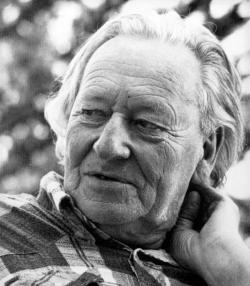
His central question, “What pattern connects the crab to the lobster and the orchid to the primrose?” guides our inquiry into UAP. The answer is not a list of physical traits, but a recognition of a shared, underlying pattern of organization.
- Applied to UAP: We are not asking, “What is this one Tic-Tac-shaped object?” We are asking, “What pattern connects the 1952 Washington D.C. flyover, the 1980 Rendlesham Forest incident, and the 2004 Nimitz encounters?” The pattern—the recurring interaction with nuclear technology, the demonstration of superior situational awareness, the elusive behavior—is the true phenomenon. The individual objects or crafts are its manifestations.
2. The Lens: Cybernetics and Systems Theory
Cybernetics is the study of control, communication, and regulation in complex systems. It gives us the tools to understand how a pattern sustains itself.
- Feedback Loops: We analyze UAP not as external invaders, but as potential elements within a larger, interactive system that includes human observers, governments, technology, and culture. A UAP event is not a one-way observation; it’s a signal that enters a complex feedback loop, provoking military responses, scientific curiosity, public belief, and official secrecy, which in turn may influence the phenomenon’s next manifestation.
- The “Control System” Hypothesis: Jacques Vallée’s seminal idea is a cybernetic one. He suggested UAP might function as a homeostatic “control system” for human culture, not controlled by us, but acting to control the boundaries of our belief systems and technological development. Its goal is not conquest, but regulation—keeping our societal trajectory within certain parameters.
3. The Tool: Counterintelligence Pattern Recognition
While Bateson gives us the “why” and Cybernetics the “how,” counterintelligence (CI) provides the practical “what to do.” It is the applied science of detecting hidden agency and intention within complex, noisy environments.
As detailed in some of our first blog posts, this involves:
- Establishing a Baseline: Defining “normal” operations in a given environment to recognize significant anomalies.
- Signature Detection: Identifying recurring behavioral “fingerprints” (e.g., the “Five Observables”) across disparate events.
- Link Analysis: Mapping the hidden relationships between seemingly unrelated events, witnesses, and locations to reveal a larger network or strategy.
When Lue Elizondo states that the real question is “what they’re doing and why they’re here,” and that the answers come from “seeing the patterns across decades of engagement,” he is speaking pure counterintelligence. He is treating the phenomenon not as a puzzle to be solved with one missing piece, but as a clandestine operation to be understood through its consistent, repeatable behaviors.
Our Synthesis: The Triangulated Approach
By combining these three fields, we arrive at a robust methodology:
- Bateson provides the goal: To find the meta-pattern that connects all UAP events into a coherent, relational whole.
- Cybernetics provides the model: To see the UAP-human relationship as a dynamic, communicative system with feedback loops and potential regulatory functions.
- Counterintelligence provides the technique: To sift through the data, filter out noise, and identify the consistent signals that betray purpose and intent.
This methodology moves us beyond the endless, circular debates over individual cases. It does not start with a conclusion about extraterrestrials, ultraterrestrials, or secret human tech. It starts with the data of behavior and interaction, and asks what story the pattern tells.
Given the limited hard, public data available on UAP and with governments still intent on withholding much of their classified material on the subject, we believe this is the most productive path forward—a path that respects the complexity of the phenomenon and seeks to understand its role in the larger system of which we are all a part.