Witness Testimony and the Scientific Database Context
The 20 January 2026 press conference, hosted by documentarian James Fox and broadcast globally by News Nation on YouTube, represents another watershed moment in the study of anomalous phenomena. Unlike speculative theories or grainy footage, the event presented a cohesive, witness-driven case built on three decades of investigation into the 1996 Varginha, Brazil incident. The cumulative testimony, involving Brazilian military personnel, medical professionals, and civilian witnesses, constructs a narrative so robust that it arguably meets the judicial standard of “beyond a reasonable doubt” for a non-human intelligence interacting with human authorities. This evidentiary foundation was notably placed within a rigorous scientific and historical context by computer scientist and researcher Dr. Jacques Vallee, who leveraged decades of official data to argue that Varginha is not an isolated anomaly, but a pivotal data point in a larger, hidden pattern.
A Cascade of Witnesses: The Evidentiary Core
The power of Fox’s presentation lay in the sheer volume and consistency of first-hand accounts, which describe a multi-day event involving a crash, the capture of living and deceased non-human entities, and a high-level cover-up involving both Brazilian and U.S. military units.
- The Crash and Retrieval: Multiple military witnesses, including high-ranking officers, described being mobilized on January 20, 1996, to secure the site of an unusual crash. They testified to the retrieval of a heavily damaged, non-human craft of unknown materials. Crucially, personnel described the swift arrival of a U.S. team—often cited as from “Fort Detrick”—who assumed control of the debris with a secrecy order imposed on all Brazilian personnel.
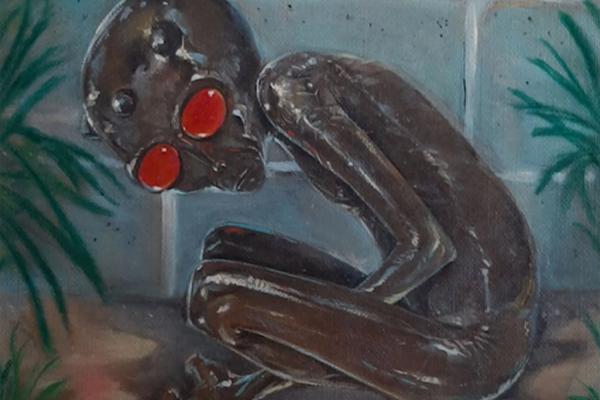
- The Living Entity: The heart of the case is the testimony regarding one or more living creatures. Civilian witnesses, including young women (the sisters) and a bus driver, gave consistent, harrowing accounts of encountering a small, bipedal being with large red eyes, oily brown skin, and a distinct odor of ammonia, crouched by the roadside in a distressed state. This testimony is shockingly corroborated by the firefighters and soldiers ordered to capture it. They described using heavy gloves and nets, detailing the being’s physical resistance, its piercing vocalizations, and the overpowering ammonia smell that caused one firefighter to later fall seriously ill.
- The Military and Medical Chain of Custody: The testimony mapped a clear path for the captured being. Military police officers testified to transporting it in a sealed wooden box to a local hospital, where medical staff—including doctors and nurses—described its admission under extreme secrecy. A gynecologist, Dr. Roger Leir (in prior interviews), famously examined the being, describing its tri-digital limbs and anomalous physiology. The final link came from military personnel who stated the being was later transferred to a higher-security facility and subsequently taken into U.S. custody.
- The Deceased Body: Separate witnesses, including a city official and military police, described the recovery of a second, deceased entity from another location. This body was reportedly stored at the city morgue before being transferred out under U.S. oversight. A nurse involved testified to the profound shock and lasting trauma experienced by the pathologists who handled the body.
The convergence of these accounts—from disparate civilians, local police, military ranks, and medical professionals—creates an interlocking story of retrieval, observation, and sequestration that is nearly impossible to dismiss as mass hallucination or hoax.
Varginha Within a Global Pattern
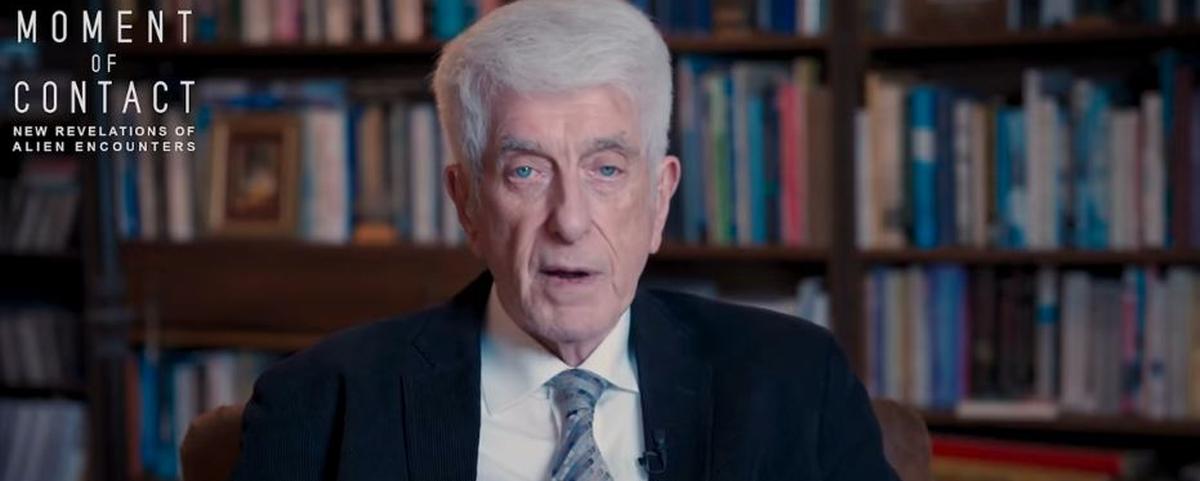
In his statement, Dr. Jacques Vallee provided the crucial scientific framework that elevates Varginha from a singular, sensational story to a case of profound comparative value. Drawing from his unique role in developing classified databases for official government studies, he presented three key points that anchor Fox’s findings in a broader evidentiary landscape:
- A Vast, Screened Repository of Data: Vallee revealed that the data warehouse system he helped initiate for a DIA-sponsored program contained over 260,000 screened reports of anomalous objects. Crucially, this database included “hundreds of reports of creatures live or dead associated with crashed or landed vehicles of unknown provenance, including some similar to those in Varginha.” This statement fundamentally shifts the conversation, asserting that the Varginha entities are not unique, but representative of a repeatedly observed biological phenomenon linked to the technology.
- Specific Historical Corroboration: Vallee directed attention to specific, well-documented historical cases his current research is re-analyzing with new physical and environmental tools: the 1945 San Antonio, New Mexico case; the 1964 Socorro, New Mexico case; and the 1965 Valensole, France case. He stated these investigations involve a total of seven creatures, “generally similar in size and general body shape to those described by the witnesses in Varginha.” This provides direct, multi-national, and multi-decade corroboration for the physical description provided by the Brazilian witnesses.
- The Call for Scientific Integration and the AI Hypothesis: Vallee argued that the segmentation and over-classification of this data hinders serious research. He made a direct plea for executive action to relax classification, which would be “world-changing” and allow the scientific community to engage properly. His concluding analysis was stark: the phenomenon, as evidenced by this global data, “appears to be an extraterrestrial phenomenon empowered by advanced artificial intelligence.” He notes that open archives from cases like Socorro and Valensole already show evidence of physical traces and materials, but that Varginha provides “exceptional new knowledge” by allowing a reconstruction of the entire event chain and a professional description of the live creature’s anatomy and behavior until its death.
Conclusion: A New Field of Research, Anchored in Data
The significance of the January 2026 press conference is twofold. First, it successfully moved a major UFO case from the realm of fringe mystery into the arena of credible historical incident, backed by a preponderance of reliable witness evidence that constructs a “body of proof” demanding investigation.
Second, and perhaps more consequentially, Jacques Vallee used his authority as an architect of official UFO databases to validate the Varginha case as a central piece in a vast, hidden jigsaw puzzle. By revealing the existence of hundreds of similar creature reports and citing specific historical cases with parallel entities, he provided the multinational and statistical context that transforms Varginha from an outlier into a keystone. His call for data integration and his hypothesis—that the global data pattern suggests an extraterrestrial intelligence utilizing advanced AI—frames the incident not as an endpoint, but as the opening of, in his words, “an entirely new field of research.” This field is no longer based on speculation, but on a convergence of firsthand testimony and a hidden catalog of official data, waiting to be fully unlocked.