A Starting Point for an Uncomfortable Investigation
If you are reading this, you likely have some familiarity with UFOs, abductions, and the question of non-human intelligence. You may have heard of close encounters of the first kind (sighting), second kind (physical evidence), third kind (entity contact), fourth kind (abduction), and even fifth kind (direct communication).
You have probably not heard of the sixth kind.
In 1999, a clinical psychologist named William J. Baldwin published a book proposing a new category: CE-VI, Close Encounters of the Possession Kind. His subtitle was stark: Interference from the Extraterrestrials Among Us.
This post introduces Baldwin’s work. It does not ask you to accept his conclusions. It asks only that you consider his credentials, his methodology, and the patterns he documented across thousands of clinical sessions—because whatever you ultimately believe about ET possession, Baldwin’s work represents a serious attempt to document something that conventional Ufology has largely ignored.
Who Was William J. Baldwin?
Before evaluating Baldwin’s claims, we must understand the man making them. And here, a comparison is instructive.
The UFO community is familiar with Dr. John E. Mack, the Pulitzer Prize-winning professor of psychiatry at Harvard Medical School who, in the 1990s, risked his academic career to study alien abduction phenomena. Mack concluded that his patients’ experiences were “not a sign of mental illness” and that the phenomenon “warranted serious study.” Despite a formal investigation by Harvard, Mack stood by his findings and his work is now widely cited in Ufology as a benchmark of credible, academically-grounded research.
William J. Baldwin was not a Harvard professor. But he shared with Mack a willingness to take patient testimony seriously when conventional psychology could not explain it. He also shared with Mack the clinical training to distinguish genuine trauma from fantasy, and the professional courage to publish findings that most of his colleagues would dismiss.
Like Mack, Baldwin was a licensed clinician with decades of experience. Like Mack, Baldwin used hypnotic regression to explore experiences his patients could not consciously access. Like Mack, Baldwin documented patterns across hundreds of unrelated cases. And like Mack, Baldwin concluded that something real—something non-human—was interacting with his patients.
The difference is that Mack studied abductions: physical encounters involving craft, examination, and often reproductive procedures. Baldwin studied something else: encounters he described as “nonphysical yet every bit as intrusive as the well-known abduction scenario.” Mack’s patients were taken. Baldwin’s patients were, in some sense, occupied.
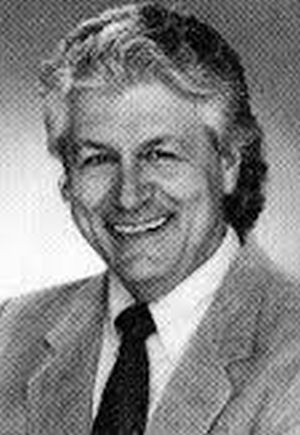
William J. Baldwin, (1937-2004) D.D.S., Ph.D., former Co-director of the Center for Human Relations, was clinical psychologist, hypnotherapist, lecturer and an ordained minister.
Baldwin held a doctorate in psychology and had extensive training in clinical hypnosis. He was the author of Spirit Releasement Therapy: A Technique Manual and Past Life Therapy: A Training Manual, professional texts used by clinicians working in transpersonal psychology.
In 1994, he received the Franklin Loehr Memorial Award from the International Association for New Science in Fort Collins, Colorado, for his “pioneering exploration of science and spirit.” He received other awards for lifetime achievement in the transpersonal field.
This is not a fringe figure writing from his basement. This is a licensed clinician who was honored by his peers for work that bridged psychology and spirituality. His approach was straightforward: when clients presented with symptoms that did not respond to conventional treatment—depression, anxiety, dissociative episodes, intrusive “voices,” personality changes—he used hypnotic regression to explore whether non-physical entities might be involved.
What he found, across thousands of sessions, led him to conclusions that remain controversial but cannot be dismissed as mere credulity.
The Clinical Problem: Patients Conventional Therapy Couldn’t Help
Baldwin’s journey into ET possession began not with UFOs but with suffering.
Throughout his clinical practice, Baldwin encountered patients whose symptoms did not respond to standard therapeutic approaches. These patients reported:
- Unexplained depression and anxiety that seemed to come from nowhere
- Dissociative episodes where they lost time or felt “not themselves”
- Intrusive thoughts or voices that felt external, not internal
- Personality changes that friends and family noticed but the patient could not explain
- Physical symptoms without medical cause
When conventional therapy failed, Baldwin began using hypnotic regression—a technique in which patients in a relaxed, focused state are guided to explore memories or experiences not accessible to their conscious mind. (Here again, the parallel with Mack is striking: Mack’s abduction research relied heavily on hypnotic regression, and he faced the same criticism for it.)
What emerged from these sessions surprised Baldwin.
The Discovery: Non-Physical Intrusions
Under hypnosis, Baldwin’s patients began describing something unexpected: non-physical intrusions by entities they identified as extraterrestrial.
As the publisher’s description of CE-VI notes:
“This kind of ET/UFO encounter appears to be nonphysical yet every bit as intrusive as the well-known abduction scenario.”
Key characteristics of what Baldwin called CE-VI include:
| Feature | Description |
|---|---|
| Nonphysical | The encounter does not necessarily involve a craft or physical contact. The entity attaches to or influences the human directly. |
| Unwanted | These intrusions are described as involuntary and unwelcome—not channeling, not mediumship, not a spiritual practice. |
| Intrusive | The entity imposes mind control at a level Baldwin describes as previously “regarded as absurd and only hinted at in other books.” |
| Clinical | These encounters manifest as psychological symptoms that bring clients to therapy. |
Baldwin was not the first clinician to notice this phenomenon. His foreword was written by Edith Fiore, Ph.D. , another pioneering psychologist who documented spirit attachments in her own practice. But Baldwin extended Fiore’s work by focusing specifically on extraterrestrial entities, not just earthbound human spirits.
And like Mack, who documented physical effects of abductions (scars, marks, unexplained pregnancies), Baldwin documented psychological effects of attachments: depression, dissociative episodes, and the sense of being “not alone” in one’s own body.
The Typology: Alien Colonists, Scientists, Castaways, and Dark Forces
One of Baldwin’s most significant contributions is his typology of alien entities. Based on what emerged through clients in altered states, he identified several distinct categories:
| Entity Type | Description |
|---|---|
| Alien Colonists | Entities seeking to establish a presence on Earth, sometimes by occupying human bodies |
| Alien Scientists | Technicians gathering data on human biology and consciousness, often involved in genetic experimentation |
| Alien Castaways | Stranded beings who attach to humans as a survival mechanism |
| Alien/Human Hybrids | Beings created through genetic manipulation, sometimes attached to human hosts |
| Dark Force Entities (DFEs) | Malevolent beings that actively seek to control, harm, or harvest energy from humans |
This typology is important because it moves beyond the simplistic “all ETs are either benevolent or malevolent” binary. Baldwin’s clinical data suggested a range of motivations: scientific curiosity, survival instinct, colonization agendas, and outright parasitism.
Particularly striking is Baldwin’s discussion of Dark Force Entities. In his framework, DFEs are not merely “evil” in a religious sense but are beings that harvest negative human emotions—fear, anguish, blood lust—as “food.” He connects this to historical practices of human sacrifice, suggesting that some ancient rituals may have been distorted from original communications with benevolent beings into mechanisms for energy harvesting by DFEs.
Whether one accepts this specific claim or not, the broader point is significant: Baldwin was documenting a pattern in which certain entities appeared to benefit from human suffering.
The Communication Phenomenon
Perhaps the most striking aspect of Baldwin’s work is his documentation of entities speaking directly through his patients while they were in altered states.
He writes:
“Through the voices of the clients in altered states of consciousness, these alien beings reveal their purposes for being here… In some cases, the ET commandant on a nearby spacecraft, and even the leader of the ruling High Council on the homeworld, will speak through the voice of the client.”
This is not possession in the classical demonic sense. It is a form of temporary consciousness takeover—an entity using a human vocal apparatus to communicate while the human’s normal awareness is suspended.
Baldwin distinguished between different types of entity attachment:
| Type | Description | Consent |
|---|---|---|
| Spirit Releasement | Earthbound human spirits needing help to cross over | Not applicable |
| Dark Force Attachment | Malevolent entities seeking to control or harvest energy | Involuntary |
| ET Attachment | Extraterrestrial beings temporarily using a human host | Often involuntary |
Baldwin was careful to note that benevolent entities—spirit guides, guardian angels, ascended masters—”neither possess nor control humans and they do not impose their own agendas.” The entities that triggered CE-VI encounters were fundamentally different: intrusive, selfish, opportunistic, sometimes confused, often malevolent.
The Consistency Argument
What makes Baldwin’s work difficult to dismiss is the consistency of the narratives he reported.
Across thousands of sessions with clients who did not know each other, who came from different backgrounds and geographic locations, the descriptions of alien entities, their motivations, and their methods remained remarkably similar.
| Consistent Finding | Reported Across Cases |
|---|---|
| ETs communicate through the client’s voice in altered states | Yes |
| ETs describe their homeworld civilizations | Yes |
| Many ETs express desire to go “home” | Yes |
| Genetic experimentation is described as ongoing | Yes |
| Some ETs announce hostile intentions | Yes |
Baldwin notes that when ETs announce hostile intentions—”they are here to take control, to simply take over the human race, beginning with our client”—these statements “clearly indicate Dark Force Entity influence.”
The pattern is not one of random invention but of structured, repeated narratives. This does not prove the narratives are true. But it does suggest they are not merely the product of individual pathology or cultural suggestion—or if they are, the suggestion is operating at a level far deeper than most psychologists acknowledge.
The Methodological Problem: Can We Trust the Data?
Any serious engagement with Baldwin’s work must address the obvious objection: his data came from clients under hypnosis. This is the same objection raised against John Mack’s abduction research, and Baldwin faces it no less directly.
Baldwin was acutely aware of this problem. In the preface to CE-VI, he writes:
“The material in this book is not offered as absolute truth. There is no way to prove the validity of the narratives which come through the client’s voices in altered state sessions. Nor can these experiences be interpreted in any meaningful way. The subjective experience of several thousands of people is presented here as part of the spectrum of the human condition.”
This is a remarkable admission of epistemic humility. Baldwin is not claiming proof. He is claiming documentation.
He also acknowledges alternative explanations:
“This channeled information could be totally fabricated by the client, consciously or unconsciously. It may be a product of the collective unconscious mind, triggered by a subliminal mass hysteria over an urban myth of alien domination.”
“A more sinister possibility… the alien abductions may involve elements of our own government who have formed some kind of alliance with ETs.”
“Equally repugnant is the possibility that the entire UFO/ET enigma might be nothing less, nor more, than field testing of mind control technology by earth’s own intelligence agencies.”
Baldwin does not dismiss these possibilities. He simply notes that his clinical experience revealed a consistent body of knowledge across thousands of unrelated clients—a pattern that could neither be denied nor ignored.
For the investigator, this is precisely the right stance: not belief, but documentation of pattern.
Baldwin’s Contribution: A Framework for Future Investigation
Even if one rejects Baldwin’s conclusion that ET possession is real, his work makes several lasting contributions:
1. Clinical documentation of a phenomenon. Baldwin provides detailed case histories of patients reporting ET intrusions. Whether one accepts the ET interpretation or not, the clinical data exists and demands explanation.
2. A typology of entities. The distinction between alien colonists, scientists, castaways, hybrids, and DFEs provides a framework for categorizing different types of reported NHI encounters.
3. The energy harvesting hypothesis. Baldwin’s suggestion that some entities feed on human fear and suffering connects ancient practices to modern ET encounters, suggesting a continuity of experience across time.
4. The consistency argument. Thousands of unrelated clients reported similar narratives. This pattern—whether interpreted as evidence of ET contact or as evidence of a shared unconscious structure—is significant.
5. A model for clinical investigation. Baldwin demonstrates how a trained clinician can approach this material: with scientific grounding, therapeutic compassion, and epistemic humility.
Conclusion: Taking Baldwin Seriously Without Accepting Everything
William J. Baldwin was not a Harvard professor. He did not have Mack’s academic platform or Pulitzer Prize. But like Mack, he was a clinician who kept encountering something in his practice that conventional psychology could not explain. Like Mack, he risked professional criticism to document what he found. And like Mack, he concluded that something real—something non-human—was interacting with his patients.
We do not have to accept every claim in CE-VI: Close Encounters of the Possession Kind to recognize its value. We do not have to believe that ETs speak through human hosts to acknowledge that thousands of people have reported experiences that fit a consistent pattern. We do not have to embrace Baldwin’s therapeutic framework to appreciate that he was asking questions most of his colleagues were unwilling to entertain.
Baldwin himself would likely agree with this cautious approach. He wrote:
“If this phenomenon is real, it must be investigated and researched thoroughly, documented and made public knowledge. And just consider the possibilities if it turns out to be true!”
This post has introduced Baldwin’s work as a starting point. Future posts will explore the patterns he documented, compare his findings with other researchers, and examine the implications for our understanding of non-human intelligence.
For now, the takeaway is simple: a licensed clinical psychologist with thousands of sessions and professional recognition documented a phenomenon that conventional Ufology has largely ignored. His work deserves to be read—not as truth, but as evidence.